
For years, a salon receptionist was simply part of opening a salon. Someone had to answer the phone, greet clients, take payments and keep the book full. Today, much of that work can be handled by online booking, automated reminders and self check-in. So the real question for owners is not whether the front desk matters. It is whether a person needs to be standing behind it all day.
This guide breaks down what a salon receptionist really costs, what the role does hour by hour, and how to decide what your salon still needs.
What a Salon Receptionist Really Costs
According to the U.S. Bureau of Labor Statistics, the median hourly wage for receptionists was $18.27 in May 2025, or about $38,010 a year (BLS Occupational Outlook Handbook). That is only the starting point.
Here is a simple example for one full-time receptionist at that median wage:
- Wages: $18.27 × 40 hours × 52 weeks = about $38,000
- Employer payroll taxes: Social Security and Medicare alone add 7.65%, about $2,900
- Before benefits, training, paid time off or turnover: roughly $41,000 a year
Most salons are open more than 40 hours a week. A salon open six days a week, ten hours a day, needs about 60 hours of front desk coverage, which usually means one and a half people. Add the cost of hiring and training a replacement each time someone leaves, and the front desk can easily become one of the largest non-service expenses in a small salon.
What the Front Desk Actually Does All Day
Before you decide what to keep, write down what your front desk does in a typical day. For most salons, the list looks something like this:
- Answering calls to book, reschedule or cancel
- Greeting clients and letting the provider know they arrived
- Collecting intake forms and waivers
- Checking clients out, taking payment and collecting tips
- Rebooking the next appointment
- Selling retail
- Answering questions about prices, parking and policies
- Handling the occasional upset client
Look at that list closely and you will notice that most of it is repetitive. It follows the same steps every time. Only a small part, like handling a complaint or helping a confused first-time client, truly needs a person.
Which Salon Receptionist Tasks Can Be Automated
Much of the front desk workload can now run without anyone standing behind the counter:
Booking and rescheduling. Online booking lets clients book, move or cancel appointments at any hour, so the phone rings far less.
Reminders and confirmations. Automated texts and emails confirm appointments and remind clients before they arrive, without anyone making calls.
Forms and waivers. Intake forms can be sent before the appointment and completed on the client’s phone.
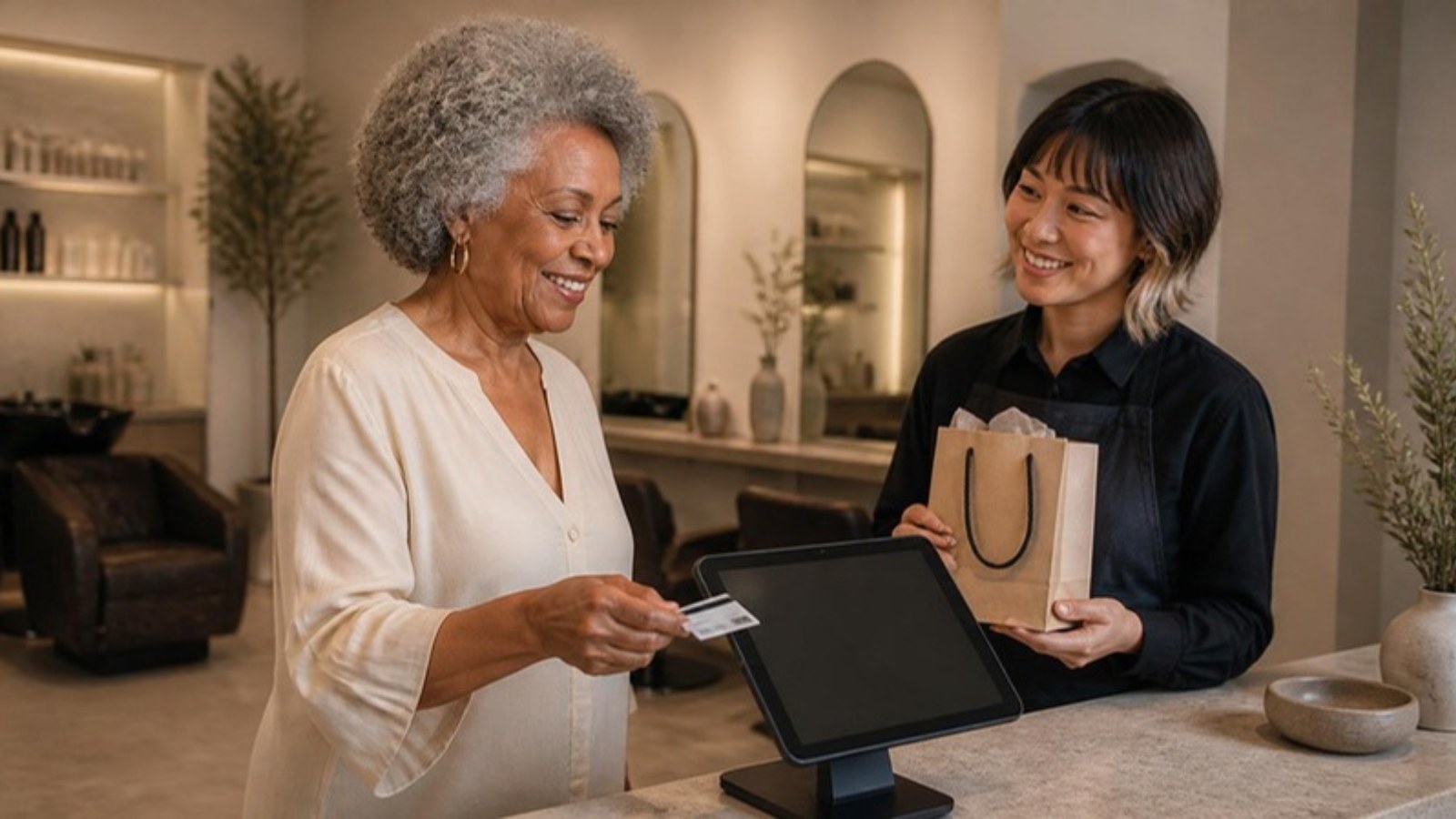
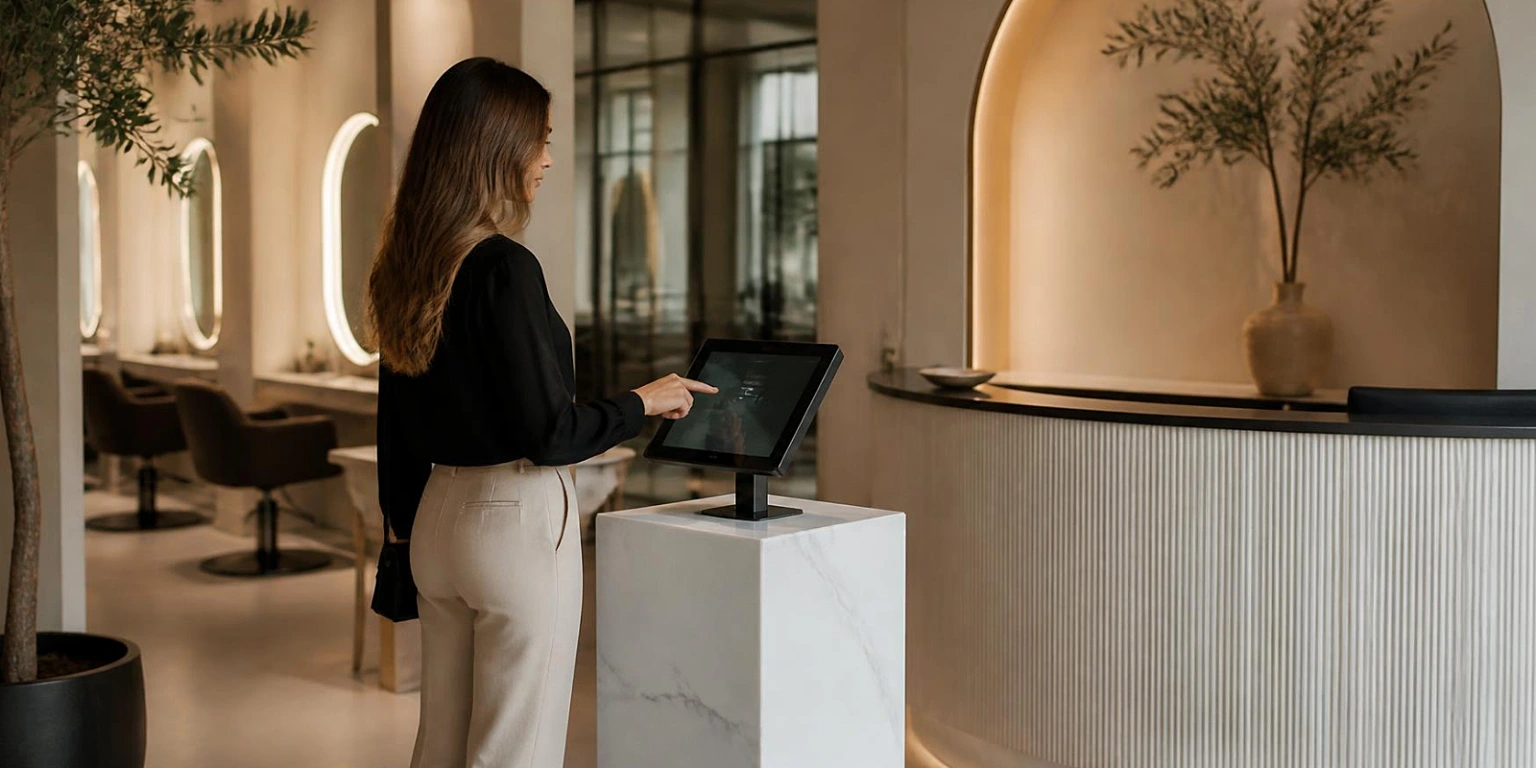
Check-in, checkout and rebooking. A salon kiosk lets clients check themselves in, pay, add a tip and book their next visit on their own, and it asks every client to rebook, every time.
Common questions. Clear information on your booking page and in confirmation messages answers most questions about pricing, parking and policies before they are asked.
What You Lose Without a Salon Receptionist
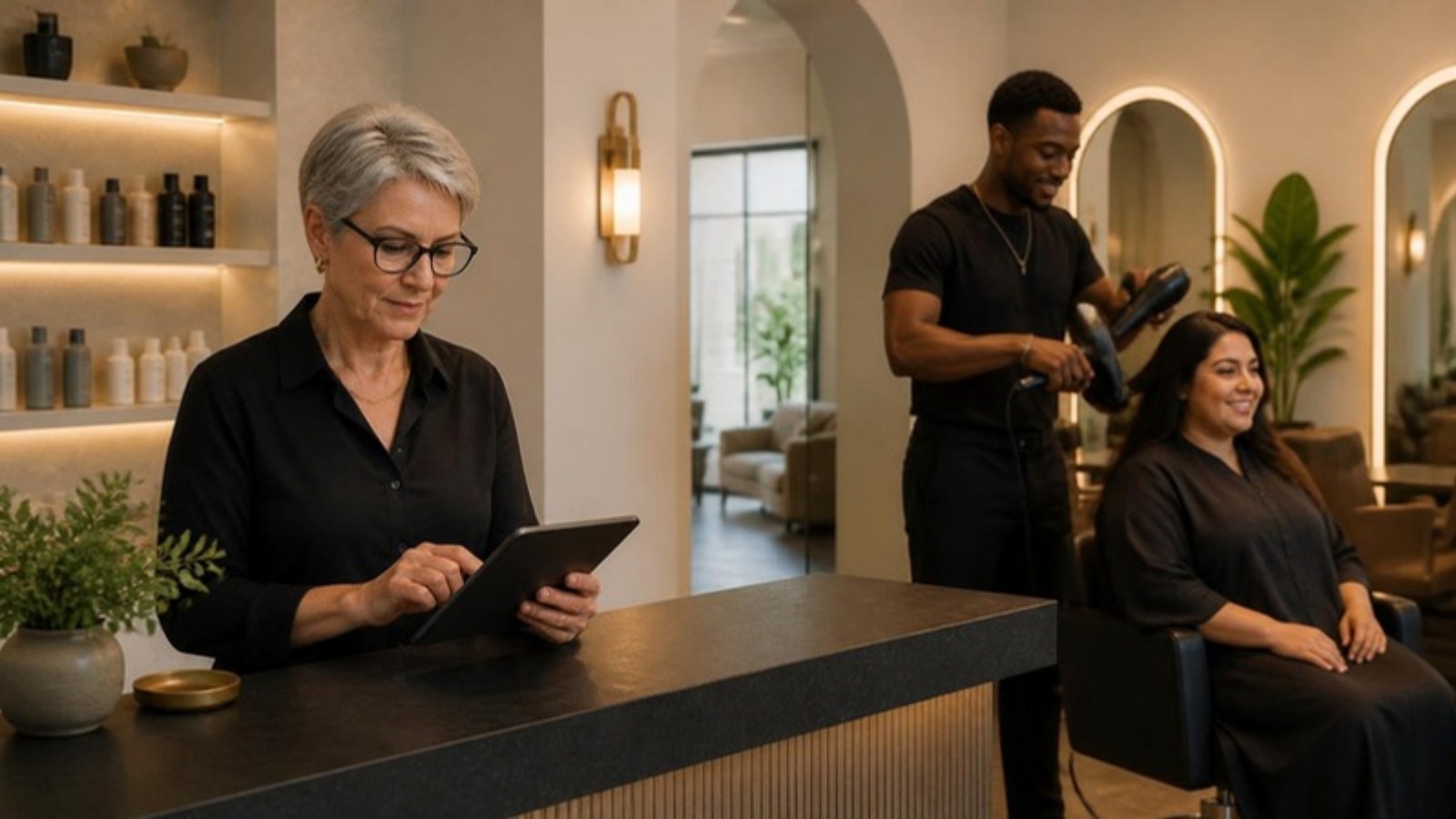
It is worth being honest about the tradeoffs. A great receptionist does things software cannot. They notice when a client seems unhappy. They calm a tense moment. They make a nervous first-time client feel welcome. In a luxury salon or spa, that personal greeting may be part of what clients pay for.
A front desk can also be inconsistent, though. On a busy afternoon, a receptionist juggling the phone, two checkouts and a walk-in may forget to offer rebooking or retail. That is where revenue quietly slips away. The goal is not to remove hospitality. It is to stop paying for hospitality with a person who spends most of the day on repetitive tasks.
Three Ways to Run Your Front Desk
1. Full-time receptionist. Best for larger salons and spas with high client volume, where a host is part of the experience. Software still helps by taking booking and reminders off their plate, so they can focus on clients in the room.
2. Hybrid. A kiosk and online booking handle check-in, checkout and rebooking, while a part-time coordinator or manager covers your busiest hours. This works well for many salons with a handful of chairs.
3. Front desk free. Online booking, automated messages and a kiosk handle the entire visit, and providers greet their own clients. This fits smaller salons, studios and suites where every dollar of overhead matters.
How to Decide What Your Salon Needs
Start with a week of real data. Count how many calls come in, how many check-ins and checkouts happen per hour, and how often clients leave without rebooking. If your front desk is busy for only a few hours a day, you may be paying for many hours of waiting.
Then look at your rebooking rate and retail sales per ticket. If they are lower than you want, a more consistent checkout may earn more than an extra person would. Our guide to the salon metrics every owner should know explains how to track both.
Finally, ask your team. Providers often know exactly where clients get stuck when they arrive and leave.
Salon Receptionist vs Kiosk: The Annual Math
Compare the two side by side. One full-time receptionist at the median wage costs roughly $41,000 a year before benefits. Emvari’s Evolve plan, which includes the self-serve kiosk, is $199 a month, or $169 a month when you pay annually. That is $2,388 a year at the monthly price. Salons on the Expand plan can add the kiosk for $79 a month per location.
A kiosk will not replace every part of a great receptionist, and it does not need to. For most small salons, the question is whether the repetitive bulk of front desk work is worth a full salary, or whether that money is better spent on your team, your space or your marketing.
Frequently Asked Questions
How much does a salon receptionist cost per year?
At the BLS median wage of $18.27 an hour, one full-time receptionist costs about $38,000 in wages, plus payroll taxes, training and any benefits. Most salons that are open more than 40 hours a week need more than one person to cover the desk.
Can a salon run without a front desk?
Yes. Many smaller salons and studios run without a receptionist by combining online booking, automated reminders and a self-serve kiosk for check-in, payment and rebooking. Providers greet their own clients when they arrive.
Will clients like checking themselves in?
Most clients are used to self-service at airports, restaurants and stores. When the kiosk is simple and the provider still greets them personally, check-in feels faster, not colder.
What should a salon receptionist focus on if software handles booking?
Hospitality and problem-solving: welcoming clients, handling special requests, resolving complaints and keeping the space ready. Those are the parts of the job that make the biggest difference.
Run Your Salon Without a Salon Receptionist Using Emvari
Emvari was built for salons that want the experience of a great front desk without the cost of staffing one. The self-serve kiosk checks clients in, takes payment and tips through Emvari payments, and rebooks every client before they leave, while online booking and automated reminders keep the calendar full. See how it fits your salon on our pricing page.