

Salon credit card processing fees add up fast. Every card payment passes through several parties, and each takes a small cut. Here is how the fees work and how to keep more of each sale.
What Salon Payment Processing Actually Does
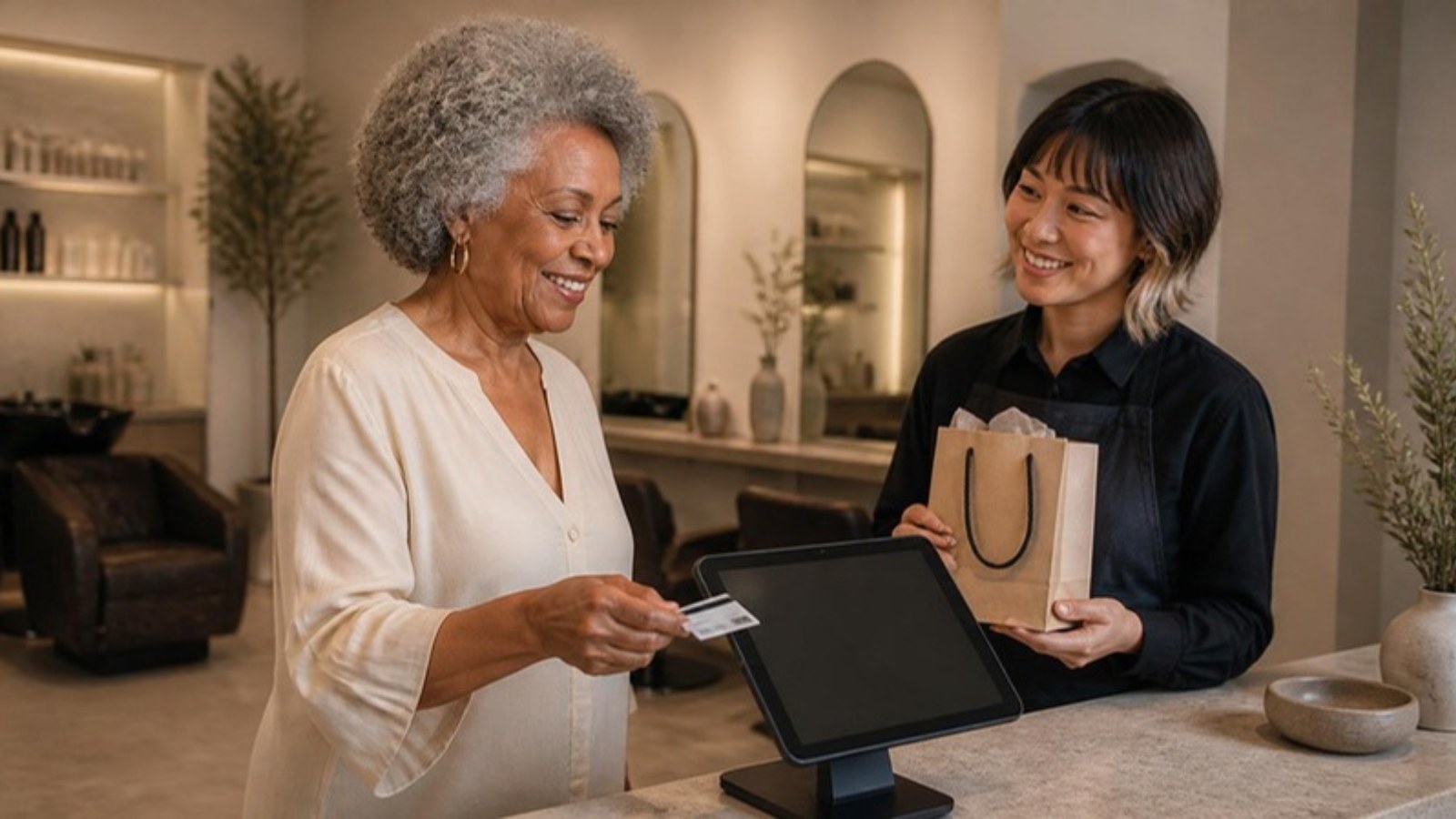
At its core, salon payment processing is the system that handles card transactions between your client’s bank and your business account. It involves several players: the card network, the bank, and your payment provider.
Each of these takes a small percentage of every transaction, which adds up quickly. The right processor keeps this process seamless and secure while minimizing what you pay per swipe. The wrong one can quietly drain thousands of dollars a year.
Why Fees Vary and What They Mean
Payment fees are not the same for everyone. They depend on your provider, the type of card, and whether the payment is made in person or online. In-person transactions are usually cheaper because they carry less risk.
Take time to read your processor’s pricing model. If your rates seem confusing, ask for a breakdown in plain language. You should always know exactly what percentage you pay and why.
How to Lower Salon Payment Processing Costs
Lowering your processing costs starts with comparison. Look for transparent pricing and flat-rate options that don’t hide extra charges. Some providers, like Emvari’s partners, negotiate wholesale rates as you scale, passing savings directly to you.
You can also save by batching transactions at the end of the day, encouraging card-present payments, and avoiding high-risk behaviors like manual card entry whenever possible.
Integrating Payment Processing with Salon Software
When your salon payment processing is connected to your booking and POS system, your entire operation becomes smoother. Transactions automatically match to appointments, tips sync instantly, and reports are accurate without manual entry.
Integration also improves cash flow by tracking what comes in, when it arrives, and how much you actually keep after fees. The more connected your systems are, the easier it becomes to manage revenue confidently.
Choosing a Provider That Grows with You
Your payment processor should be a long-term partner, not a quick setup. Look for one that supports both in-person and online transactions, offers clear reporting, and scales as your business grows.
You want a provider that understands the beauty industry and supports the rhythm of your salon, not just the transaction. Good processing feels invisible because it simply works.
The Takeaway
Salon payment processing might sound technical, but mastering it gives you control. It shapes profit margins, affects client experience, and influences how easily your business runs.
At Emvari, we help salons simplify their payment systems with transparent rates, integrated reporting, and effortless setup. When your technology supports your growth, every transaction becomes one more step toward stability and success.
Every processor should also meet the card security standards set by the PCI Security Standards Council.
The Three Common Pricing Models for Salon Credit Card Processing Fees
Most processors price their fees in one of three ways. Knowing which one you are on is the first step to knowing whether you are overpaying.
Flat rate. You pay the same percentage, sometimes plus a few cents, on every transaction. It is easy to understand and budget for, which makes it popular with smaller salons.
Interchange plus. You pay the card network’s actual cost plus a fixed markup from the processor. It is often cheaper at higher volumes, but statements are harder to read.
Tiered. Transactions are sorted into groups like “qualified” and “non-qualified,” each with its own rate. It can look cheap upfront, but many transactions end up in the more expensive tiers.
Ask any provider to show you which model they use and what a typical month would cost at your volume.
Run the Numbers on Your Own Salon
Small rate differences add up. As an example, a salon processing $40,000 a month in card payments pays about $1,160 a month at 2.9%, and about $1,040 at 2.6%. That 0.3% difference is roughly $1,440 a year, before any monthly or per-transaction fees.
Pull your last three statements and divide total fees by total card sales. That gives you your effective rate, the real percentage you pay once every fee is included. It is the most useful number to compare when you shop around.
How to Read Your Processing Statement
Processing statements can be confusing on purpose. Look for a few key lines each month. Total volume is how much you processed in card sales. Total fees is everything you paid, including transaction fees, monthly fees and any extra charges. Divide fees by volume to get your effective rate.
Then look for fees you do not recognize. Common ones include monthly minimums, PCI compliance fees, statement fees, chargeback fees and early termination fees in your contract. Ask your provider to explain anything unclear in writing.
If your effective rate creeps up over time without a change in how you take payments, ask why. Rates can change, and a quick review of your statement each month is the easiest way to catch it before it costs you.
Frequently Asked Questions
What are typical salon credit card processing fees?
Many salons pay somewhere between about 2.5% and 3.5% of each card sale once all fees are counted. Your effective rate depends on your provider, your card mix and how many payments are keyed in by hand.
Can a salon pass card fees on to clients?
Rules on surcharging vary by state and by card network, and some states restrict it. Check the current rules for your state before adding a fee, and always disclose it clearly.
Why are online and keyed-in payments more expensive?
When the card is not physically present, the risk of fraud is higher, so networks charge more. Encouraging tap and chip payments in the salon keeps costs down.
Do salons pay processing fees on tips?
Usually, yes. Tips added to a card payment are part of the total charged, so processing fees apply to the full amount. Check your state rules and your own pay policy before deciding how to handle that cost with your team.
Lower Salon Credit Card Processing Fees With Emvari
Emvari’s salon payment processing is built into booking and checkout with transparent pricing: 2.6% + 10¢ in person, 3.4% + 15¢ online, plus a $15/month merchant account fee once payments are live. No setup, PCI, or statement fees. See plans on our pricing page.