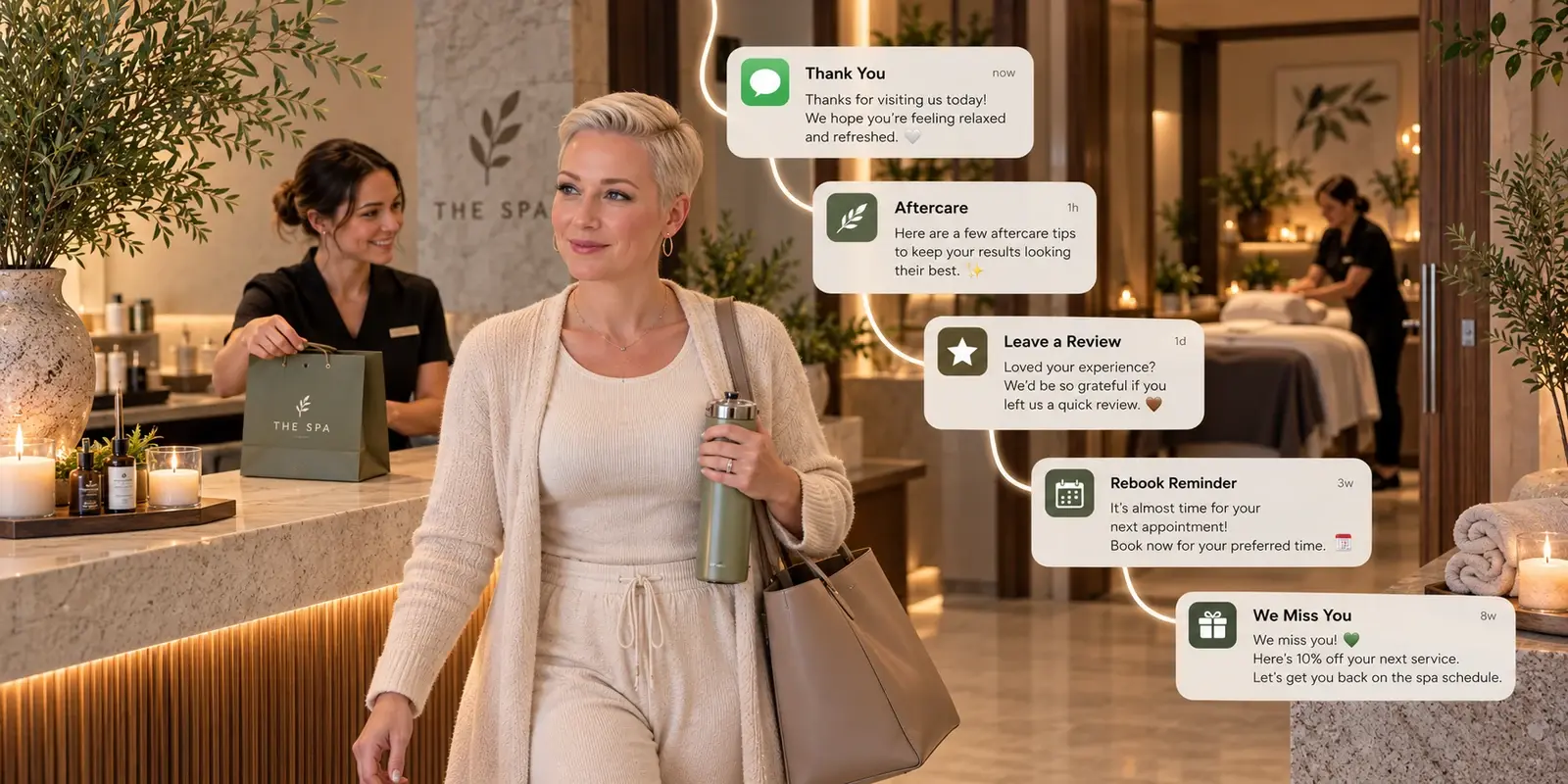
The right salon follow-up messages keep clients informed, cut no-shows and bring people back, and none of them should depend on someone remembering to send them. These are the messages every beauty and wellness business should automate, and when each one should go out.
Appointment Confirmation
Immediately after booking, clients should receive confirmation containing their essential appointment details.
This reduces uncertainty and gives clients confidence that everything was booked correctly.
Appointment Reminders
Automated reminders before an appointment help reduce forgotten visits and no shows.
Depending on your business, you may want more than one reminder leading up to the appointment.
The important part is that your team does not have to manually send every message.
Pre Appointment Instructions
Some services require preparation.
Maybe clients should arrive without makeup, avoid certain products beforehand, complete a form, or arrive a few minutes early.
Instead of relying on your team to explain the same instructions repeatedly, automate them based on the service booked.
Post Appointment Thank You
A simple thank you keeps the relationship going after the appointment ends.
It can also be an opportunity to provide aftercare information while the service is still fresh in the client’s mind.
Review Requests
Happy clients are often willing to leave reviews. They simply do not think about doing it.
An automated review request sent after a completed appointment makes the process easy and allows you to consistently collect feedback.
Rebooking Reminders
If a service should typically be repeated every four, six, or eight weeks, automate communication around that timeframe.
Instead of hoping clients remember to return, your business can reach out when they are likely to need another appointment.
Win Back Messages
Some clients simply fall out of their routine.
A client who has not visited in several months may not have intentionally stopped coming. Life got busy and they forgot to book.
Automated win back messages give you an opportunity to reconnect. You do not necessarily need to offer a discount.
Sometimes a simple reminder is enough.
Automation Should Still Feel Human
Automation works best when clients do not feel like they are talking to a robot.
Messages should sound like your brand, arrive at useful moments, and provide information the client actually needs.
Good automation does not replace client relationships. It helps your business maintain them consistently.
Emvari brings booking, client communication, reminders, and automation together so beauty and wellness businesses can stay connected with clients without creating more manual work for their teams.
The simplest follow-up, the reminder, has real evidence behind it: a Cochrane review found text reminders improved appointment attendance compared with no reminder (Cochrane review on text reminders).
How to Time Your Salon Follow-Up Messages
Timing is what makes a message feel helpful instead of noisy. A simple schedule that works for most salons looks like this:
Right after booking: the confirmation, with date, time, service, provider and your cancellation policy.
Two days before: a reminder with a link to confirm or reschedule, sent while there is still time to fill the opening.
The morning of: a short reminder for services where a no-show is costly.
A few hours after the visit: a thank-you with aftercare tips and a review link.
When the service is due again: a rebooking reminder based on how often that service should be repeated.
After a long gap: a win-back message for clients who have not visited in two or three cycles.
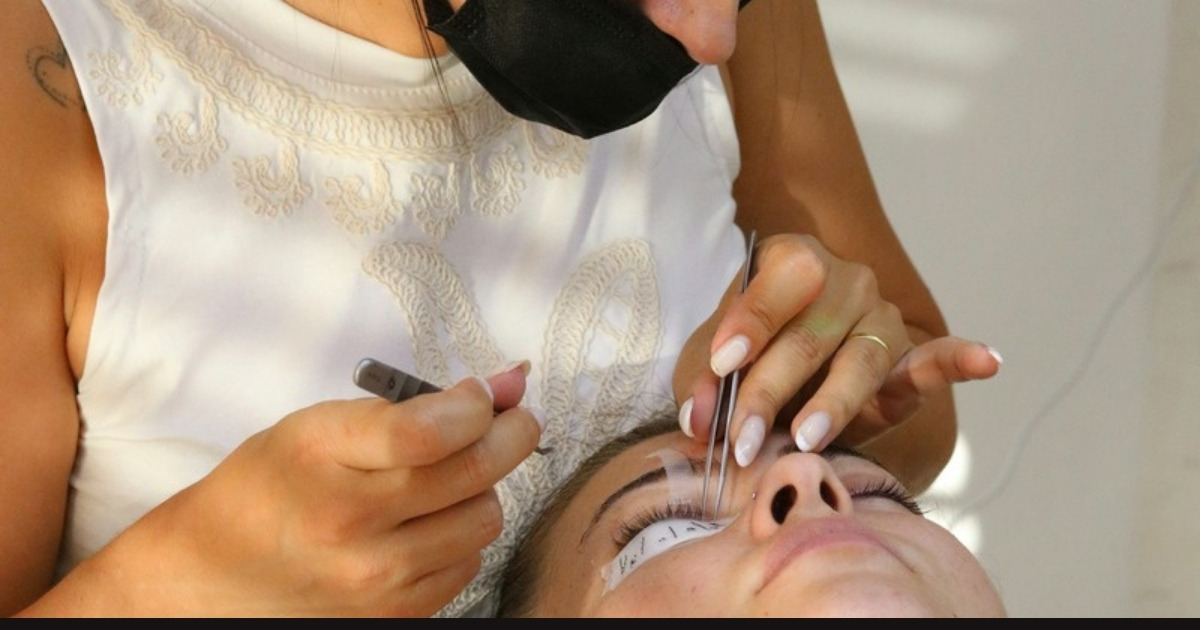
Adjust the timing to your services. A lash fill on a two- to three-week cycle needs a different rebooking reminder than a color service on an eight-week cycle.
Write Messages That Sound Like Your Salon
Clients can tell when a message was written by software. Use your salon’s name, the provider’s first name and the service they booked. Keep texts short enough to read in a few seconds, and save longer details like preparation instructions for email.
Every message should have one clear next step: confirm, reschedule, leave a review or book. When a message asks for three things, clients usually do none of them.
Measure Whether Your Follow-Ups Are Working
Automation is only useful if it changes results. Check a few numbers every month to see whether your messages are doing their job.
Watch your no-show rate before and after reminders are turned on. Track how many clients rebook after receiving a rebooking reminder, and how many lapsed clients return after a win-back message. Count the new reviews that arrive after a review request goes out.
If a message is not moving its number, change one thing at a time: the timing, the wording or the call to action. For example, if few clients rebook from a reminder sent at six weeks, try sending it at five. Small adjustments, tested one at a time, will tell you what your clients respond to.
Frequently Asked Questions
How many reminders should a salon send before an appointment?
Most salons do well with two: one a couple of days before, so there is time to refill a cancellation, and one on the day of the appointment. More than that starts to feel like nagging.
Should follow-up messages be texts or emails?
Use texts for short, time-sensitive messages like reminders and rebooking prompts, since most people read a text quickly. Use email for longer content like aftercare instructions, policies and receipts.
Will automated messages feel impersonal to clients?
Not if they are written in your voice and arrive at useful moments. Clients notice when a message is helpful, not whether a person pressed send.
Which follow-up message should a salon automate first?
Start with appointment reminders, because they protect revenue right away by reducing no-shows. Then add rebooking reminders, which bring clients back on schedule, and review requests, which grow your reputation over time.
Automate Salon Follow-Up Messages With Emvari
Emvari sends these automatically through appointment reminders and notifications, and every reply lands in one shared salon inbox instead of a stylist’s personal phone.