

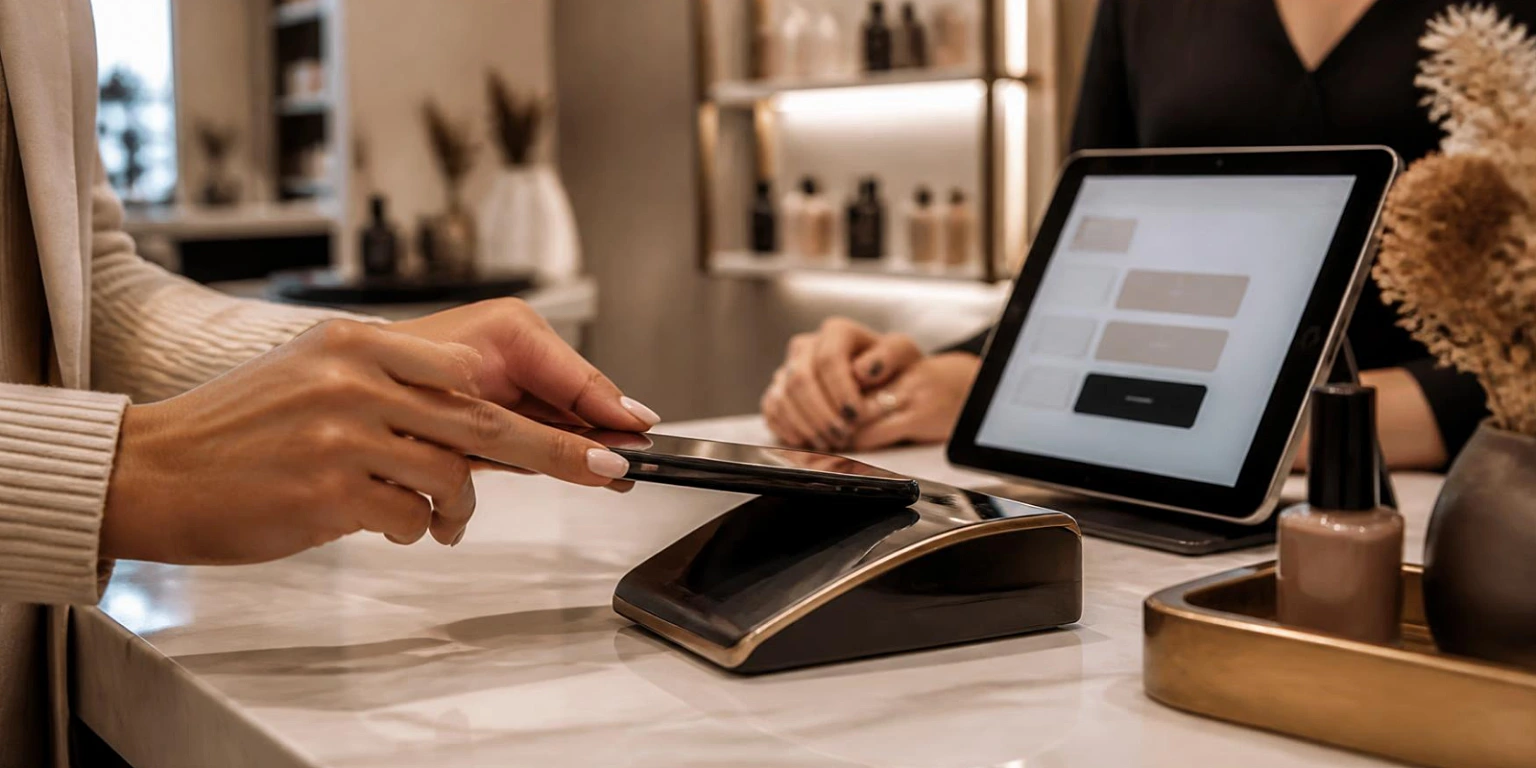
Salon tips are a big part of how stylists, lash artists and nail technicians are paid, and a common source of tension when they are handled badly. A missing tip, a late payout or a confusing split can damage trust with your team faster than almost anything else. This guide covers how to collect tips, split them, pay them out and keep clean records, so everyone knows exactly what they earned.
This is general information, not legal or tax advice. Tip rules vary by state, so confirm the details with your accountant or payroll provider.
Make Tipping Easy for Clients
Most clients now pay by card, tap or phone, and many no longer carry cash. If your checkout does not offer a simple way to tip on a card, you are likely leaving money on the table for your team.
A good tip screen shows a few suggested amounts, an option for a custom tip and a clear “no tip” option. Suggested amounts remove the mental math, and a clean screen keeps the moment from feeling awkward. Ideally, the tip is attached to the right provider automatically, so nobody has to sort it out later.
The Federal Rules Every Salon Owner Should Know
If your stylists are employees, federal law sets some clear limits. According to the U.S. Department of Labor, employers may not keep any portion of employees’ tips for any purpose, and managers and supervisors may not receive tips from a tip pool (DOL Fact Sheet #15).
The same fact sheet covers two questions salon owners ask often:
- Card processing fees. An employer may reduce a card tip by no more than the actual processing fee on that tip. For example, if the fee is 3%, the employee must receive at least 97% of the tip. Some states do not allow this deduction at all.
- Payout timing. Card tips must be paid no later than the regular payday, and they cannot be held while the employer waits for the card company to pay out.
Booth renters are different. They run their own businesses, so tips their clients leave belong to them.
How to Split Salon Tips Between Providers
Splits happen more often than many owners expect. A color client may be served by a stylist and an assistant. A pedicure and manicure may be done by two nail technicians at once. Decide your rules in advance and write them down:
- Split by service. Each provider receives the share of the tip that matches the share of the service price they performed.
- Split evenly. Two providers on one service share the tip equally.
- Client’s choice. The client chooses how much to give each provider at checkout.
Whatever you choose, apply it the same way every time and make sure each person can see their own tips. Transparency prevents most disputes before they start.
Tip Pools: When They Make Sense
Some salons pool tips so assistants, shampoo staff and front desk team members share in what clients give. A tip pool can build teamwork, but it has rules. Under federal law, managers and supervisors cannot receive tips from the pool, and who else can take part depends on how you pay your team. Check federal and state rules before you set one up, and explain the pool clearly when you hire.
Keep Clean Records of Every Tip
Good tip records protect both your team and your business. For every tip, you should be able to see the client, the service, the provider, the amount and whether it was paid by card or cash. Employees also have their own reporting responsibilities to the IRS, so give each team member an easy way to see their tip totals by pay period.
Avoid tracking tips by hand in a notebook or spreadsheet. Manual tracking leads to missed tips, mismatched totals and uncomfortable conversations at payday.
Choose How and When to Pay Out Tips
Most salons pay card tips with each payroll. Some offer more frequent payouts, which team members appreciate, but make sure your records stay accurate no matter the schedule. Whatever you choose, explain it clearly when someone joins your team and stick to it. A predictable payout schedule builds trust.
Common Salon Tip Mistakes to Avoid
- Deducting more than the actual processing fee from card tips
- Holding tips until the card company pays out
- Letting managers take part in a tip pool
- Splitting tips differently depending on who is working the desk
- Keeping tip records outside your checkout system
Frequently Asked Questions
Can a salon owner keep part of employees’ tips?
No. Under federal law, employers cannot keep any portion of employees’ tips. The only allowed reduction on card tips is the actual processing fee, and some states do not permit that either.
How much do clients usually tip at a salon?
Many clients tip around 15% to 20% of the service price, but habits vary by region and service. Suggested amounts on your tip screen help clients decide quickly.
How should tips be split when two people do one service?
Choose a rule in advance, such as splitting by each person’s share of the service, and apply it every time. Make sure each provider can see their own tips.
Do booth renters have to share tips with the salon?
No. Booth renters run their own businesses, so tips from their clients belong to them.
Should tips count toward a stylist’s commission?
Usually not. Commission is typically calculated on service revenue, and tips are paid to the provider separately on top of it. Keeping the two separate in your reports makes pay easier to check.
Track Salon Tips Automatically With Emvari
Emvari routes every tip to the right provider at checkout, whether clients pay at the chair or at the self-serve kiosk. Emvari payments show every payout in one dashboard, and team management tools let each stylist see their own tips in their app, so payday has no surprises. Processing is a flat 2.6% + 10¢ for card-present payments, so the fee on any tip is easy to calculate. (Payments also carry a $15/month merchant account fee once they are live, which does not change the fee on a tip.) See every plan on our pricing page.