
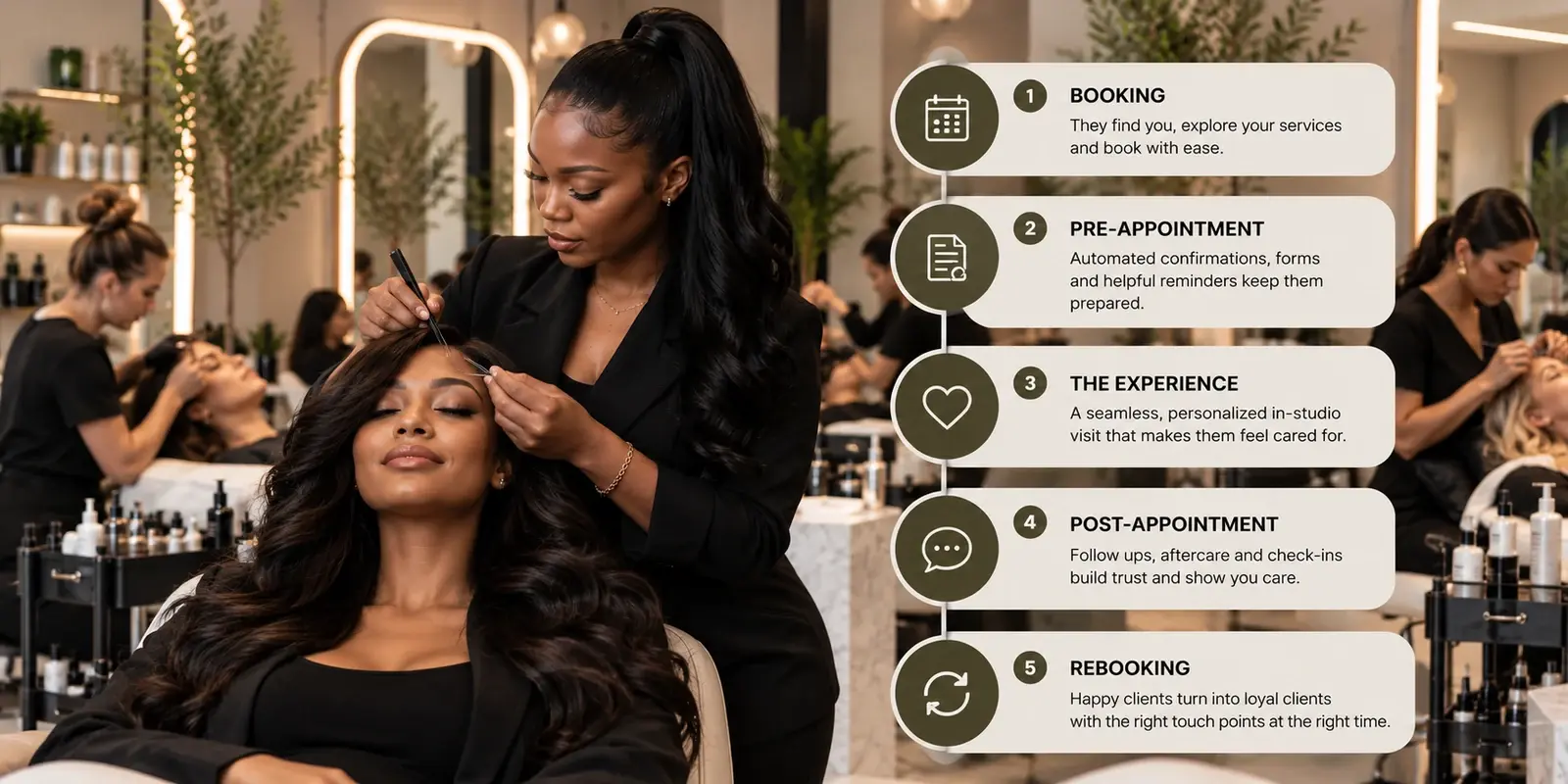
The salon client journey doesn’t start in the chair. It starts with a Google search or an Instagram post, and it ends, ideally, with the next appointment already booked. Here’s what happens at each step, and where small salons lose clients without noticing.
Discovery
The journey often begins with Google, social media, a referral, or your website.
Potential clients are immediately asking themselves questions. Does this business offer what I need?
Can I trust them?
How much does it cost? Where are they located? Can I easily book?
Make those answers easy to find.
Booking
Once someone decides they want an appointment, do not make them work for it. The booking experience should be intuitive, mobile friendly, and fast.
Accurate service descriptions, pricing, policies, and appointment times help establish expectations before the client ever arrives.
Before the Appointment
Confirmation and reminder messages reassure clients that their appointment is scheduled.
Provide important instructions before they arrive, including preparation requirements, forms, parking information, or anything else that could create confusion.
Arrival
The first few minutes matter.
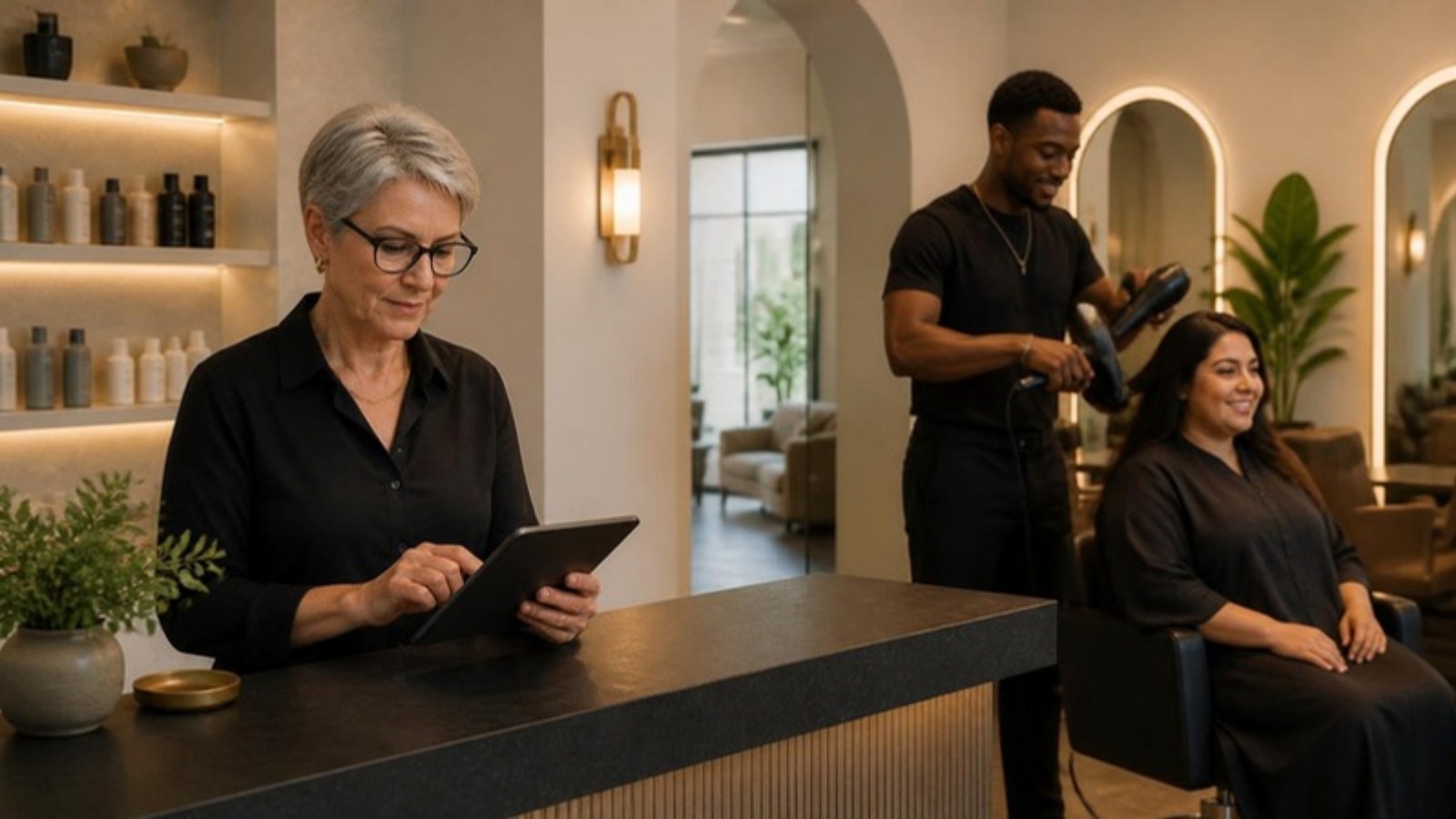
Clients should know where to go and what to do.
Whether you use a front desk, self check in, or kiosk, the experience should feel intentional rather than confusing.
The Service
Technical quality matters.
So does everything surrounding it. Was the provider on time?
Did they listen?
Did they remember preferences? Did the environment feel clean? Did the client feel comfortable?
Those details become part of how clients evaluate the overall service.
Checkout
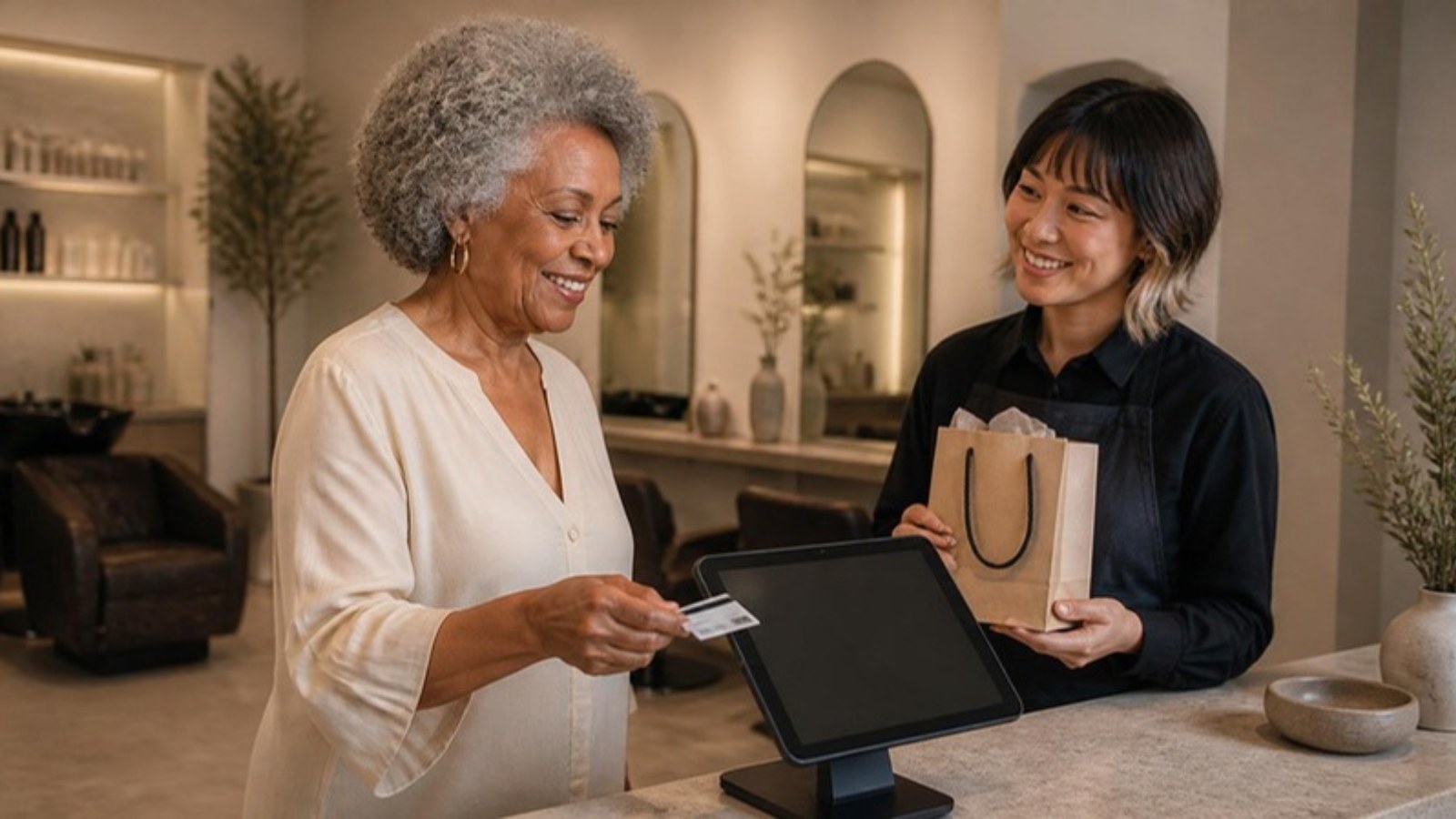
Checkout should be simple.
This is also an opportunity to recommend appropriate products, explain maintenance, apply loyalty benefits, and schedule the client’s next appointment.
A complicated checkout process can create unnecessary friction at the very end of an otherwise great experience.
After the Appointment
The client journey does not end at checkout.
Follow up communication can include aftercare instructions, a thank you, review request, or rebooking reminder.
This keeps your business connected to the client between visits.
Rebooking
Ultimately, a great client journey should make returning feel easy.
Clients should know when they need to come back and have a convenient way to book their next appointment.
Every Touchpoint Matters
Client experience is not one big moment. It is dozens of small ones.
When those moments feel easy, consistent, and thoughtful, clients have fewer reasons to look somewhere else.
Emvari connects the client journey from online booking and check in through checkout, communication, loyalty, and rebooking, helping businesses create a more consistent experience at every touchpoint.
McKinsey partners writing in Harvard Business Review found that companies that manage the full customer journey, not just individual touchpoints, deliver a better experience (HBR: The Truth About Customer Experience).
Where Small Salons Lose Clients in the Journey
Most client loss is quiet. Nobody complains. They just do not come back. These are the gaps where it usually happens:
Booking friction. A new client who cannot book online at 10 p.m. often books somewhere else by morning.
No reminder. A forgotten appointment can turn into an embarrassed client who never rebooks.
A rushed checkout. When the front desk is busy, nobody offers the next appointment, and the client leaves without a plan to return.
Silence after the visit. Without a thank-you or a rebooking reminder, your salon fades from their mind before the service is due again.
Look at your own numbers. If many first-time clients never come back for a second visit, the problem is usually in one of these steps, not in the service itself.
How to Map Your Own Salon Client Journey
Book an appointment at your own salon as if you were a new client. Use your phone, start from Google or Instagram, and note every moment you hesitate or have to guess. Then read every message you receive, from confirmation to follow-up.
Ask a friend who has never visited to do the same and tell you honestly where it felt confusing. Fix the biggest gap first, then repeat the exercise every few months. Small fixes at each step add up to a noticeably smoother experience.
Use the Salon Client Journey to Train Your Team
The client journey is also a training tool. Walk new team members through each step from the client’s point of view, starting with how clients find and book with you. Explain what the client should feel at arrival, during the service and at checkout, and what your team is responsible for at each moment.
Give each step an owner. The front desk or kiosk handles arrival and checkout. The provider handles the consultation, service and rebooking conversation. Automated messages handle confirmations, reminders and follow-up. When everyone knows which moments are theirs, fewer clients fall through the gaps between people.
Review the journey together a few times a year. Ask the team where clients seem confused or frustrated. The people working with clients every day often spot problems long before they show up in your numbers.
Frequently Asked Questions
What is a salon client journey?
It is every step a client takes with your business, from first finding you online through booking, arrival, the service, checkout, follow-up and the next appointment.
Which part of the client journey matters most?
Checkout and the follow-up after it matter most for retention, because that is when the next visit is either booked or left to chance.
How can I improve the journey without hiring more staff?
Automate the repeatable parts: confirmations, reminders, thank-you messages and rebooking prompts. Self check-in and checkout can also free your team to focus on clients in the chair.
How do I know where clients drop off in the journey?
Compare your numbers at each step: how many people view your booking page, how many book, how many show up, how many rebook and how many return. The biggest drop between two steps is the first place to fix.
How Emvari Supports the Salon Client Journey
Emvari covers the full salon client journey: online booking from Google and Instagram, a self-serve kiosk for arrival and checkout, and rebooking prompts before the client walks out.